Testicular Cancer: Early Detection, Symptoms & Treatment at NECHRI Guwahati
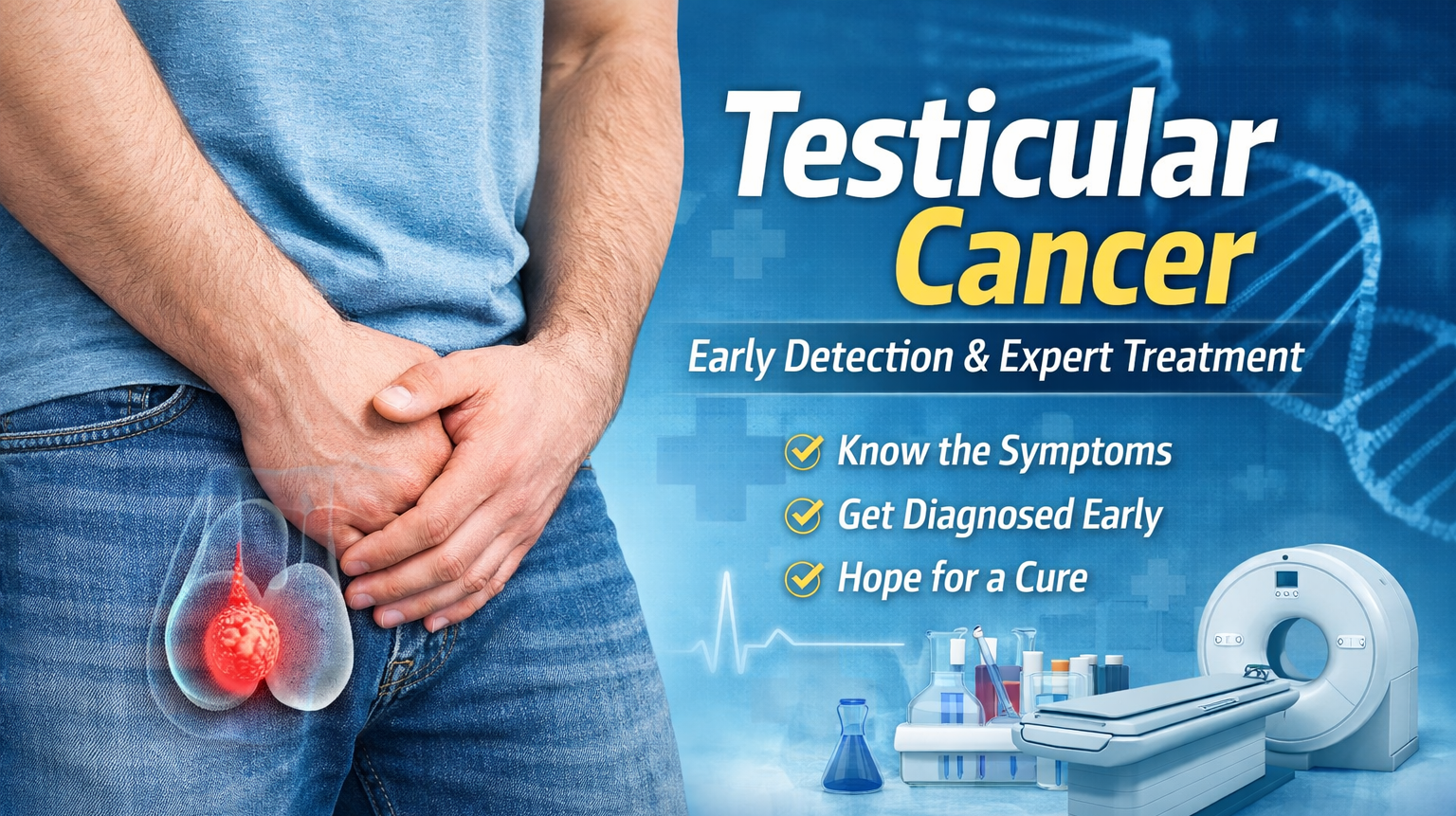
Testicular cancer is one of the less common cancers, but it is also one of the most treatable and curable, especially when detected early. What makes it important to talk about is that it often affects younger men, typically between the ages of 15 and 45, a stage of life where health concerns are least expected.
Despite high cure rates, many cases are diagnosed late due to a lack of awareness or hesitation in seeking medical advice. At North East Cancer Hospital & Research Institute (NECHRI), Guwahati, early diagnosis and timely treatment remain key to improving outcomes.
What Is Testicular Cancer?
Testicular cancer develops in the testicles (testes), which are part of the male reproductive system. These organs are responsible for producing sperm and the hormone testosterone.
The cancer usually begins in germ cells — the cells that produce sperm. In most cases, it is highly responsive to treatment, even when diagnosed at a relatively advanced stage.
Who Is at Risk?
While testicular cancer can affect any male, certain factors may increase risk:
* Age between 15 and 45 years
* Undescended testicle (cryptorchidism)
* Family history of testicular cancer
* Previous history of cancer in one testicle
* Abnormal testicular development
Understanding these risk factors can help in early vigilance and timely screening.
Early Signs and Symptoms
One of the biggest advantages in managing testicular cancer is that early signs are often noticeable.
Men should seek medical advice if they notice:
* A painless lump or swelling in either testicle
* A feeling of heaviness in the scrotum
* Dull ache in the lower abdomen or groin
* Sudden fluid collection in the scrotum
* Pain or discomfort in the testicle or scrotum
In some cases, symptoms may be subtle, which is why self-awareness and regular self-examination are important.
The Importance of Early Detection
Testicular cancer has one of the highest cure rates among cancers. When detected early:
* Treatment is less complex.
* Cure rates exceed 95% in many cases.
* Recovery is faster
* Long-term complications are reduced.
Delays in diagnosis can allow the cancer to spread to lymph nodes or other organs, making treatment more intensive.
Diagnosis at NECHRI
Accurate diagnosis is essential for effective treatment planning.
At NECHRI Guwahati, evaluation typically includes:
* Clinical examination
* Ultrasound of the testicles
* Blood tests (tumor markers)
* Biopsy and histopathology
* Advanced imaging, such as PET-CT scans, for staging
PET-CT imaging helps determine whether the cancer has spread and plays a crucial role in guiding treatment decisions.
Treatment Options for Testicular Cancer
Treatment depends on the stage and type of cancer. Common approaches include:
Surgery
Removal of the affected testicle (orchiectomy) is often the first step and can be curative in early stages.
Chemotherapy
Used when cancer has spread or to reduce the risk of recurrence.
Radiation Therapy
It may be recommended in specific types of testicular cancer.
Surveillance
In selected early-stage cases, careful postoperative monitoring may be advised.
At NECHRI, treatment plans are personalised, combining expertise across medical, surgical, and radiation oncology.
Life After Treatment
With successful treatment, most patients return to normal life. Fertility, hormonal balance, and long-term health are carefully considered during and after treatment.
Follow-up care is essential to:
* Monitor for recurrence
* Manage side effects
* Ensure overall well-being
Breaking the Silence Around Men’s Health
One of the biggest challenges with testicular cancer is not medical — it is social. Many men hesitate to talk about symptoms or delay consultation due to discomfort or lack of awareness.
Encouraging open conversations and routine self-checks can lead to earlier detection and better outcomes.
NECHRI’s Commitment to Cancer Care in Assam
At North East Cancer Hospital & Research Institute (NECHRI), Guwahati, we are committed to:
* Early diagnosis and awareness
* Advanced diagnostic technologies
* Multidisciplinary cancer treatment
* Patient-focused care
Our goal is to ensure that patients across Assam and the North East have access to timely, effective, and compassionate cancer care.
A Simple Message
Testicular cancer is highly treatable.
Early detection can save lives.
Awareness can make the difference.
If you notice any unusual changes, do not delay seeking medical advice.
📞 For consultation and screening guidance: 9435707661
📠NECHRI, Jorabat, Guwahati
Despite high cure rates, many cases are diagnosed late due to a lack of awareness or hesitation in seeking medical advice. At North East Cancer Hospital & Research Institute (NECHRI), Guwahati, early diagnosis and timely treatment remain key to improving outcomes.
What Is Testicular Cancer?
Testicular cancer develops in the testicles (testes), which are part of the male reproductive system. These organs are responsible for producing sperm and the hormone testosterone.
The cancer usually begins in germ cells — the cells that produce sperm. In most cases, it is highly responsive to treatment, even when diagnosed at a relatively advanced stage.
Who Is at Risk?
While testicular cancer can affect any male, certain factors may increase risk:
* Age between 15 and 45 years
* Undescended testicle (cryptorchidism)
* Family history of testicular cancer
* Previous history of cancer in one testicle
* Abnormal testicular development
Understanding these risk factors can help in early vigilance and timely screening.
Early Signs and Symptoms
One of the biggest advantages in managing testicular cancer is that early signs are often noticeable.
Men should seek medical advice if they notice:
* A painless lump or swelling in either testicle
* A feeling of heaviness in the scrotum
* Dull ache in the lower abdomen or groin
* Sudden fluid collection in the scrotum
* Pain or discomfort in the testicle or scrotum
In some cases, symptoms may be subtle, which is why self-awareness and regular self-examination are important.
The Importance of Early Detection
Testicular cancer has one of the highest cure rates among cancers. When detected early:
* Treatment is less complex.
* Cure rates exceed 95% in many cases.
* Recovery is faster
* Long-term complications are reduced.
Delays in diagnosis can allow the cancer to spread to lymph nodes or other organs, making treatment more intensive.
Diagnosis at NECHRI
Accurate diagnosis is essential for effective treatment planning.
At NECHRI Guwahati, evaluation typically includes:
* Clinical examination
* Ultrasound of the testicles
* Blood tests (tumor markers)
* Biopsy and histopathology
* Advanced imaging, such as PET-CT scans, for staging
PET-CT imaging helps determine whether the cancer has spread and plays a crucial role in guiding treatment decisions.
Treatment Options for Testicular Cancer
Treatment depends on the stage and type of cancer. Common approaches include:
Surgery
Removal of the affected testicle (orchiectomy) is often the first step and can be curative in early stages.
Chemotherapy
Used when cancer has spread or to reduce the risk of recurrence.
Radiation Therapy
It may be recommended in specific types of testicular cancer.
Surveillance
In selected early-stage cases, careful postoperative monitoring may be advised.
At NECHRI, treatment plans are personalised, combining expertise across medical, surgical, and radiation oncology.
Life After Treatment
With successful treatment, most patients return to normal life. Fertility, hormonal balance, and long-term health are carefully considered during and after treatment.
Follow-up care is essential to:
* Monitor for recurrence
* Manage side effects
* Ensure overall well-being
Breaking the Silence Around Men’s Health
One of the biggest challenges with testicular cancer is not medical — it is social. Many men hesitate to talk about symptoms or delay consultation due to discomfort or lack of awareness.
Encouraging open conversations and routine self-checks can lead to earlier detection and better outcomes.
NECHRI’s Commitment to Cancer Care in Assam
At North East Cancer Hospital & Research Institute (NECHRI), Guwahati, we are committed to:
* Early diagnosis and awareness
* Advanced diagnostic technologies
* Multidisciplinary cancer treatment
* Patient-focused care
Our goal is to ensure that patients across Assam and the North East have access to timely, effective, and compassionate cancer care.
A Simple Message
Testicular cancer is highly treatable.
Early detection can save lives.
Awareness can make the difference.
If you notice any unusual changes, do not delay seeking medical advice.
📞 For consultation and screening guidance: 9435707661
📠NECHRI, Jorabat, Guwahati